Digital journey is never the end but always a new start

I am glad I have selected this module and was a part of this unique learning experience. Unlike the traditional lecture which only presented by the lecturer, students are interacting with the whole class, leaded by the lecturer as well as listening to ideas from everyone. I believe this is what University is for, not only meet people from all around the world, but study and improve with them combine the technologies we have today. Value individual ideas and critical thinking, avoid the risk of group think.

New Area

Image result for surprised

Communications, A. (2019). Wednesday Writing Prompt #24: The Last Time You Were Surprised – Active Voice Communications. Retrieved from https://theactivevoice.com/wednesday-writing-prompt-24-last-time-surprised/

I rarely look into the makeup market other than buying ‘necessary’ gifts for my girlfriend 😅. By reading Roshni’s blog on Sephora, I had the opportunity to explore how digital technology changed the makeup industry, the interesting business ideas and applications. I am impressed that my idea (as an ignorance outsider to makeup) has been agreed by Roshni. Although I am still trying to get my laptop to work on online make up Vitural Artist with the use of Virtual Reality (VR). 😞

Further to the VR technology in makeup industry, I also discussed its use in future computer game industry with Simon. Simon shared his computer science expertise and introduced me the new concept between the traditional and VR, which is Augmented Reality (AR).

International Opinions

Image result for International

International Relations – PDip, MA – Canterbury – The University of Kent. (2019). Retrieved from https://www.kent.ac.uk/courses/postgraduate/45/international-relations

I was excited to see Boom did a similar blog as mine, based on the digitalized banking industry. This was a great opportunity for me to discuss my view with a student in a different cultural background (Boom is from Thailand), combining with the feedback I received on my blog and ask Boom for his idea on this area.

Bigger Scale

Image result for Think big

Start Small Think Big — SFEDA. (2019). Retrieved from https://www.sfeda.org/start-small-think-big

I commented on another interesting blog from Boom, which was about the food delivery company Go-Jek. We discussed whether the more technology equipped DBM can be used to contribute to the society, such as use the collected data from the Go-Jek delivery app in health research. In my opinion, the improved digital technology shouldn’t only be used for company’s monetary profit but the profit for the whole society and further make a better world.

Receiving Comments, Think and Discuss critically

It is always great to see my work been appreciated by others. Friends as well as people that I have never met before. It has really offered me a chance to engage with others in a more depth and professional manner. Simon and I discussed about the rise in cryptocurrency and its use on people who have difficulties to access financial services. My friend Ash pointed out the AI staffed bank that I mentioned in my blog might be redundant with the improved online banking services, which brought me to think that are the overwhelming applications with improved digital technologies really practicable or just for an eye-catching trial.

What I have taken from this journey and what next?

Chen’s DBM Journey

Four comments used in blog:

  1. https://roshnikanayalal.home.blog/2019/02/10/how-sephora-blur-the-lines-between-online-and-offline-customer-experience/#comment-6
  2. https://innovation.tech.blog/2019/03/03/from-developer-to-distributor-the-story-of-valve/#comment-30
  3. https://thanaphatsri.wordpress.com/2019/02/10/35/#comment-10
  4. https://thanaphatsri.wordpress.com/2019/03/03/go-jek-story-of-a-magnificent-unicorn/#comment-11

Recieved comments mentioned above:

  1. https://chen.travel.blog/2019/03/03/digitalized-banking-service-in-hsbc/#comment-8
  2. https://chen.travel.blog/2019/03/03/digitalized-banking-service-in-hsbc/#comment-12

Digitalized banking service in HSBC


HSBC logo. (2019). Retrieved from https://www.hsbc.co.uk/

Go digital or Go home’, fast improving digital models enable companies to increase their efficiency and revenue under a sharing economy, on the other hand, for companies who couldn’t keep up in the line might get ‘send home’ no matter how successful they were in the past. A good example is the photography giant Kodak, which has failed to adapt this sharing economy and further led to its bankruptcy against its digitalized competitors like Apple and Nikon.

From traditional to digital

As a matter of fact, the connection in the digital world is not only about technology. Peter Weill suggested a four-dimensional approach of choosing a suitable digital business model. Peter’s model indicates that the organization should think from ‘omnichannel conduction’, ‘ecosystem driver’, ‘supplier expansion’ and ‘modular producer’ by setting a clear initial strategy and further applying appropriate digital methods to solve the challenges that arose from its strategy, instead of applying the most recent technology without a specific business drive. HSBC is one of the organizations which utilized this model to conduct their digital operations.

How HSBC reinvented its digital business model

As a leader in the world banking industry, HSBC has directed $2.3 billion on improving its artificial intelligence (AI) and digital capabilities around the globe in the past 2 years, as part of its effort to improve the experience of existing customers and attract more of the customer segments it is targeting for growth. Here are some approaches they have conducted:

  • Build a mature contact center

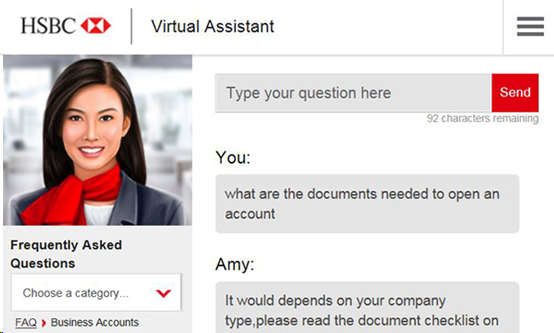
You don’t want to visit a branch just with a question that can be answered in a minute or call up and wait to be answered forever (even though you could do other stuff while ringing, how many of us enjoy the constant beeping in the background?). To solve this ‘omnichannel’ challenge, HSBC has launched a 24/7 contact center in 2017 for people that need a general banking assistant. HSBC’s live Chatbot AiDA resulted in a $3.5 million annual cost saving (staff cost etc.) and provides more flexibility to clients as well as a more comfortable experience.


HSBC chatbot AiDA. (2019). Retrieved from https://thefinancialbrand.com/71251/chatbots-banking-trends-ai-cx/
  • Develop an ‘ecosystem’ mobile app

HSBC worked with IBM and improved the HSBC app that gives users more authorization to trade financial products, which increases its potential margins. After upgrading the additional features in HSBC app, the download increased by 55% in 2017, and was up by 60% in terms of value payments. According to HSBC , there was a 333% increase in the number of mobile banking customers over the past 5 years.

Image result for HSBC app features

HSBC Mobile Banking App. (2019). Retrieved from https://www.knowyourmobile.com/mobile-phones/apple-iphone-6/22699/uks-best-and-worst-banking-apps-iphone-2016
  • Enhanced collaboration with tech giants
Image result for HSBC apple pay

Apple Pay | Credit Card Payment Service – HSBC HK. (2019). Retrieved from https://www.hsbc.com.hk/credit-cards/products/payment-services/apple-pay/

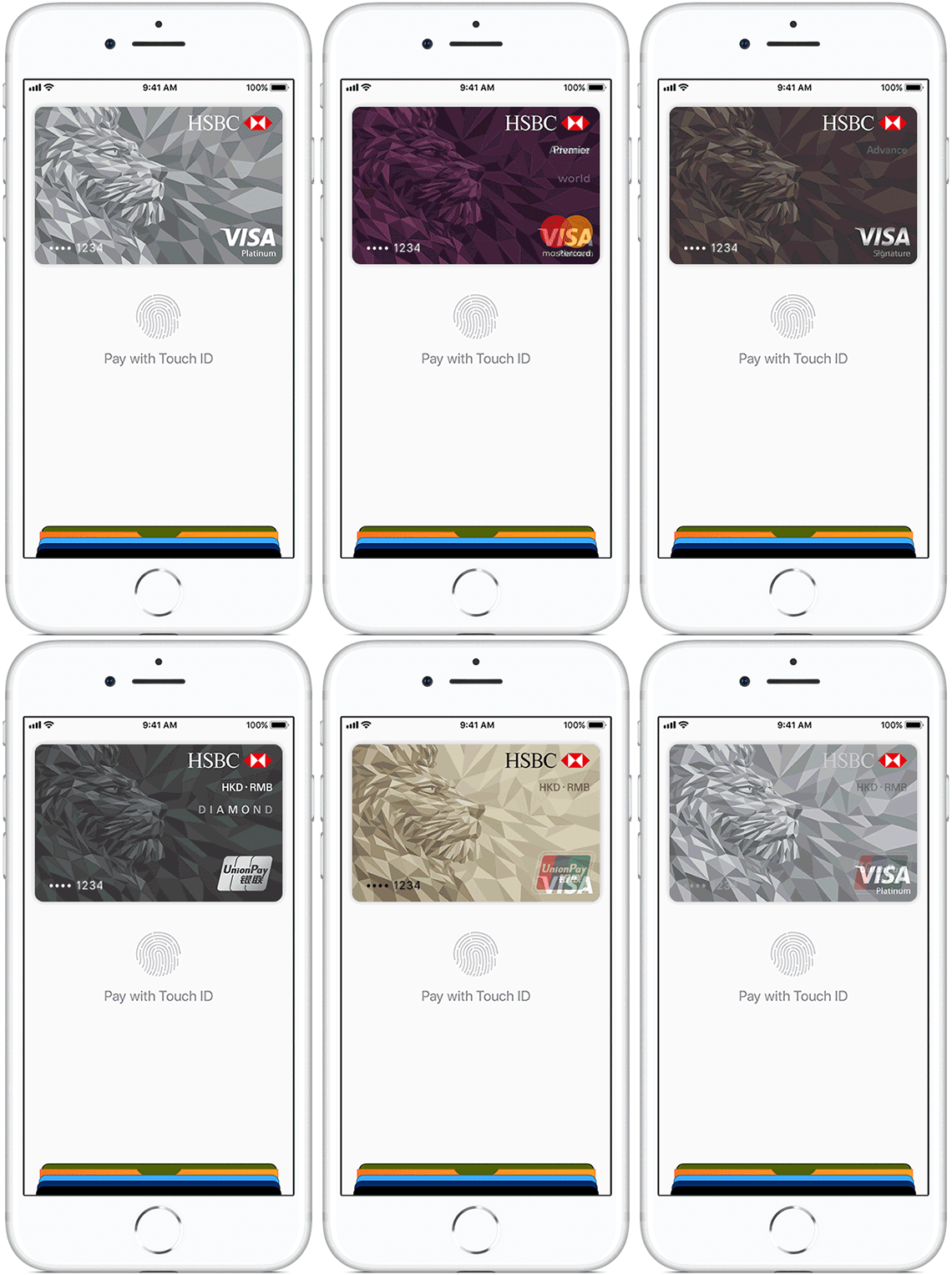
With the rise in payment giants like Wechat Pay, which combines social media with mobile payment, our society is moving not only to cashless but ‘cardless’. The ‘modular producer’ dimension is getting more and more important.

In response to the above issue, HSBC began to collaborate with other Fintech companies and further launched the massively well-received Apple Pay and Android Pay services; and created a data lake that performs the analytics monitoring customer behavior for compliance purposes. By doing this, HSBC had an additional 1.5 million customers of its digital banking services globally. This further can be used to construct a better consumer profile, thus a better marketing strategy on its financial products.

  • Upcoming future unmanned bank

HSBC’s new robot assistant ‘Pepper’ has recently launched in HSBC flagship Fifth Avenue branch in New York. ‘Pepper’ gives not only amusement in the queue, but also effectively solves customers’ query and improves their banking experience. With more ‘Peppers’ being applied in the future, branches front stuff cost can be reduced. As a matter of fact, the first unmanned bank has already launched in Shanghai last year with all unmanned counters and AI ‘staffs’.


Meet Pepper: HSBC’s new banking assistant robot. (2019). Retrieved from https://www.youtube.com/watch?v=norC0ekdoLQ

Tradeoffs of digitization

It is crucial for the organization to be aware of the drawbacks within its digital transition. HSBC has confirmed its information breach in 2018. The clients’ information leaked to public including user names and transaction details. Although HSBC has quickly managed to get back control by updating its system and minimized the damage, the lost in clients’ trust is not as easy as fixing the technology issues.

Compatibility is always another problem for digital models. With the increased urbanization and globalization, although more and more of us are getting used to the fast-moving technologies, there is still a huge proportion of our population that couldn’t access to internet. Thus, are these high-tech equipped models like unmanned bank really practical at the moment? Especially for a bank, where people keep most of their assets, upgrading it to be unmanned will be a completely different story compare to digitalized shops like Amazon Go. Therefore, how to efficiently apply the digital technologies is still a question for HSBC to consider.

Image result for future banking

Conclusion

Digital business models and the sharing economy have inevitably the potential to increase value of organizations. But the question is where and how to apply these models in order to make the best use of them. The organizations should also consider their company profile and strategy in order to apply the correct digital methods instead of chasing the latest digital technology without a clear future vision.

Digital lifestyle — the Newborn of Under Armour

The transaction of a traditional sports brand

‘For the first 5 years I made one product, it’s about being committed to one idea and making it the very best that I could.’ said by the Under Armour CEO Kevin Plank. And therefore, when people think of Under Armour (UA), the first thing came across people’s mind is UA’s sports compression shirt which was the first product made by Kevin Plank in 1996. Based on this philosophy, UA has now became the top 5 sports brand on the planet.

However, one type of products can’t not help the brand to stay in this highly competitive sports brand market for decades, so if you ask Kevin Plank now, he may tell you ‘data is the new oil. ’, which he wouldn’t have said 20 years ago.

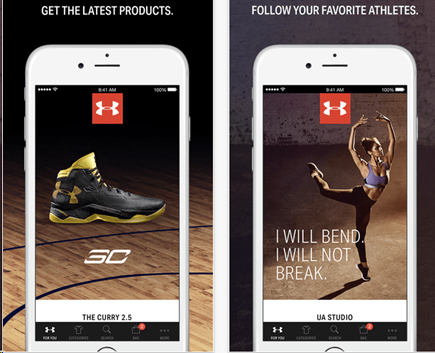
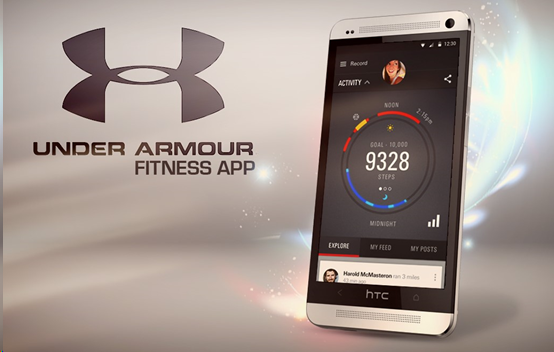
In 2013, the sports brand giant Under Armour has started to make its move into the digital world by launching it’s own digital fitness platform called Connected Fitness that aims to connect the whole world by sports, which has been invested for more than $710 million until 2017. It offers digital advertising through its MapMyFitness, MyFitnessPal, Endomondo and UA Record applications as well as digital fitness platform licenses and subscriptions. People can track their everyday exercise performance and share their tips with people all around the world.

Does the Connected Fitness worth the money, or in other words, are there actually more opportunities for operating in a digital location rather than physical location?

With the decline in the recent high-street shopping, more and more brands starting to run away from the traditional way of retailing and opening up their own online businesses.

  • Operating on physical locations mean more expenses on staff and rent, as a result, more companies chose to transit to digital way for more revenue opportunities.
  • People in different locations connected more than ever through nowadays digital technologies, so why opening a shop on High Street and face only the local customers instead of the whole world?
  • Digital technologies collect huge amount of customer data, and further aid the company to make a better customer profiles and marketing strategy.

As for UA, the Brand started strong in 2015 with the purchase of fitness app companies Endomondo and MyFitnessPal. With the technology in place, Under Armour launched UA Record, the world’s largest fitness platform and an online social hub for the everyday athlete. Today, with MyFitnessPal boasting over 200 million users, UA has been established as a company that doesn’t just change how athletes dress—but change how they live.

So, does the physical location even matter anymore?

Nowadays, you can attend a Skype meeting anywhere anytime as long as you have a mobile device with internet, likewise, you can buy anything around the world wherever you are. Yes, location seems not as important as before.

As a matter of fact, UA has distributed 151 factory house stores mostly in North America. In the meanwhile, it has different hubs of logistics for shipping to different destinations. But besides being a warehouse hub, physical hubs became more like a show space which designed to display UA’s unique brand image in sports rather than just a retail shop.

However, physical store can improve customer awareness and guaranteeing the quality of the products to customers. Also, for the products that need to be returned, physical store is a better way than shipping. How many customers are tired of waiting to mail the unwanted items back and checking their bank account everyday for the refund? On the other hand, face to face communication in shops would help customers further engage with the company, thus, increase customer loyalty. Therefore, although digital operation is a trend, but a physical hub is still necessary.

Image result for Under armour flagship

Challenges, trade-offs and further development for digital operation

Getting everything digital, in my opinion, means getting everything including risks.

Users would input their personal information and even financial account to the company digital platforms. If the platforms crash, millions of data will be exposed to the public or even worse, someone could steal others’ credit information. We have seen how leaked data could have an affect on us from the recent Facebook scandal. Similar thing happened to UA, the App “my fitness pal” has a 1.5 billion of users’ information breach, including user names and passwords, which triggered the company’s stock fell by 2.4%, but more importantly, a dramatical fall in customers trust, which would be difficult to fix in a short run.

In conclusion, it is not a surprising anymore to see brands like Under Armour to have its own digital platform. However, it is still not feasible for most companies to only have the online platform but no store in any physical locations. Although the App gives company flexibility, more customer information and advertising opportunities, there still involve a lot of time and budget to ensure and maintain the platform’s stability, which in most cases, more expensive than investing in physical stores. Undoubtably, the digital locations provided company with a much wider customer group and a high potential revenue, but there is still a long way for this method to be sustainable and more regulations should be applied in order to protect the customer data securities.


The ‘NEW’ Retail

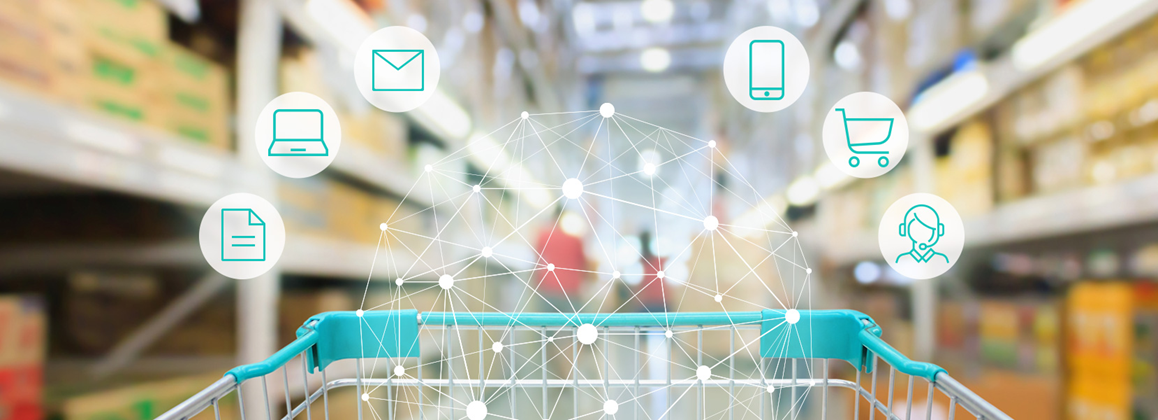
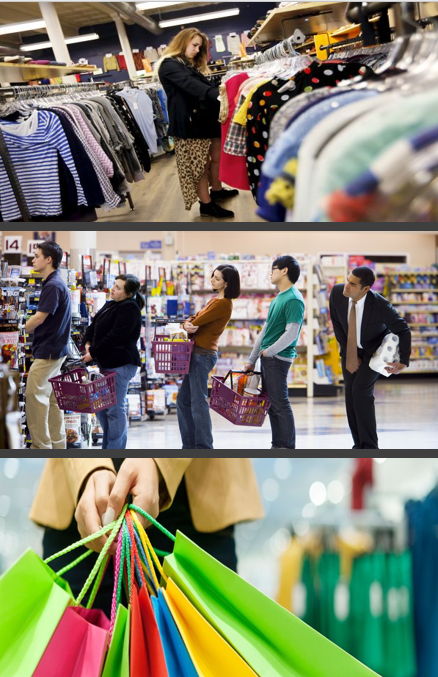
Traditonally when we think of retail, we often think of the long queing time, tones of selections and hands full shopping bags. In fact, the drawbacks like the above factors really caused a decline in the whole retail industry. ‘Retailers shut 2,700 shops in first half of the year’ (BBC News, 2019) in 2018 and the collapse of retail giants such as House of Fraser has demonstrated that now the online digital retail is really taking over the high street shopping.

Let’s look at some figures, the average person in UK spends one year, two weeks and a day of their lives stuck in shop queues according to a report by Box Technologies and Intel. (Studholme, 2018) After 9 minutes, shoppers are likely to give up queuing and leave empty handed.

If we turn our heads to the digital retail world and have a look at two examples of benefits:

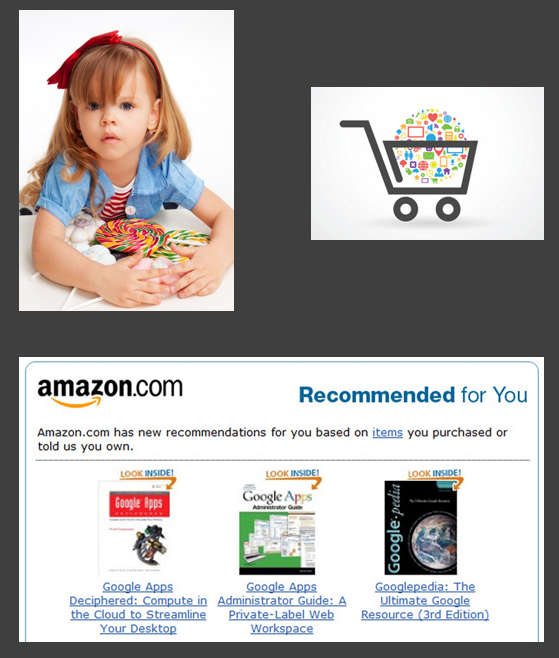
Product Recommendation

  • More potential revenue for retailers. For example, more than 35% of all Amazon sales are generated by their referral engine. (Rejoiner, 2018).
  • The constomers review feature (if it’s a good 5 stars review!!) may lead to a higher sale on products.
This image has an empty alt attribute; its file name is image-3.png
  • More related suggestions would let the consumers to stay on the webpage longer and view more pages. Research has shown that the number of page views which showed is positively related to higher repeat purchase rates by consumers. (Panagiotelis, Smith and Danaher, 2013).

Chatbot

  • Giving customers 24hrs online service, which increases customers satisfaction.
  • Reduce the cost for retailers on customer service.
  • Better products information can be delivered to customers unlike human only have certain amount of memory.

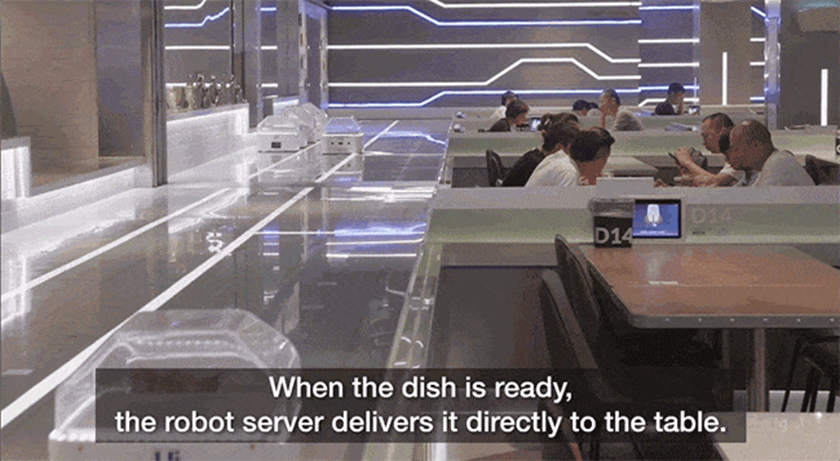
Given the two brief examples, we can look forward to the future of the retail industry. Not long ago, the new idea about the ‘New’ Retail was introduced by Jack Ma, the founder of Alibaba. He introduced a brand new Hema store, which is a grocery store that combined both the digital online retail and the traditional retail. One of the reasons is customers would like to pick the products, like fresh food themselves. The high tech equipped Hema store has features including price optimization bar code, which varies according to the live time market price, the facial checkout system and even has a connected Hema store canteen, which can cook the food that picked by customers instantly and all served with robot delivers. As more and more of these new shops poping up, we are entering in a new era of retail and we should better be prepared to get us use to communicate with the new digitial tools!

Reference

BBC News. (2019). Retailers ‘closing 14 shops a day’. [online] Available at: https://www.bbc.co.uk/news/business-46142025.

Studholme, J. (2018). How to use technology to reduce queues and increase sales. Retail Sensing. Available at: https://www.retailsensing.com/people-counting/sales-queue/.

Rejoiner. (2018). Amazon’s Recommendation Engine: The Secret To Selling More Online. [online] Available at: http://rejoiner.com/resources/amazon-recommendations-secret-selling-online/.

Panagiotelis, A., Smith, M. and Danaher, P. (2013). From Amazon to Apple: Modeling Online Retail Sales, Purchase Incidence and Visit Behavior. SSRN Electronic Journal.